Outside the old mill, the night wind pushed across the bare hilltop and set the great sails turning. Warm light spilled from the mill’s windows, and the smell of cinnamon and baked bread drifted down the slope, among the rows of scarecrows rattling softly on their poles.
Ireena and Retnuh stood a little apart from it, the horses shifting behind them, neither quite willing to go inside.
“Would you really have given me to Strahd?” Ireena asked.
Retnuh considered it, then shrugged. “The cool magic guy who gave me this horse? Yeah, maybe. But there’s no end date on the agreement. You said you didn’t want to go to him until you were ready, so we can wait until then.”
Ireena looked at him for a moment. “Your honesty is quite disarming.”
Her eyes drifted to Buccephalus and she was quiet, turning something over.
“You must be from a warm land,” she said at last. “You are dressed very strangely for the cold.”
“I don’t really remember,” Retnuh admitted. “I think I might have lived near a mountain. Or maybe by the ocean.”
Ireena frowned. “What is an ocean?”
Retnuh stared at her, and the question landed somewhere deeper than he’d expected. She had never left the valley. Nobody here had. And he realised, with a slow cold weight, that he might lose the memory of what he’d just named as easily as everything else.
“It’s like a massive lake,” he said carefully. “As far as the eye can see.”
“That sounds terrifying.”
“Yeah.” He almost smiled. “Honestly, I think the ocean should only belong to people who were born there.”
“Who is born in the ocean?”
“Fish. And mermen.”
“What is a merman?”
“Well…” Retnuh began, and Ireena leaned in, wholly interested, as he started to explain.
Behind them, the mill door opened, and Edric, Virro, and Ignacious stepped out into the wind.
The party talked it over on the hilltop and agreed to rest for the night. Virro and Edric made a point that whatever lurked in the dark around here seemed to keep well clear of the women in the old mill.
“That’s more reason not to stay,” Retnuh said.
Nobody argued with him. They took the road down the hill and made camp in the shelter of the trees, well out of sight of the turning sails.
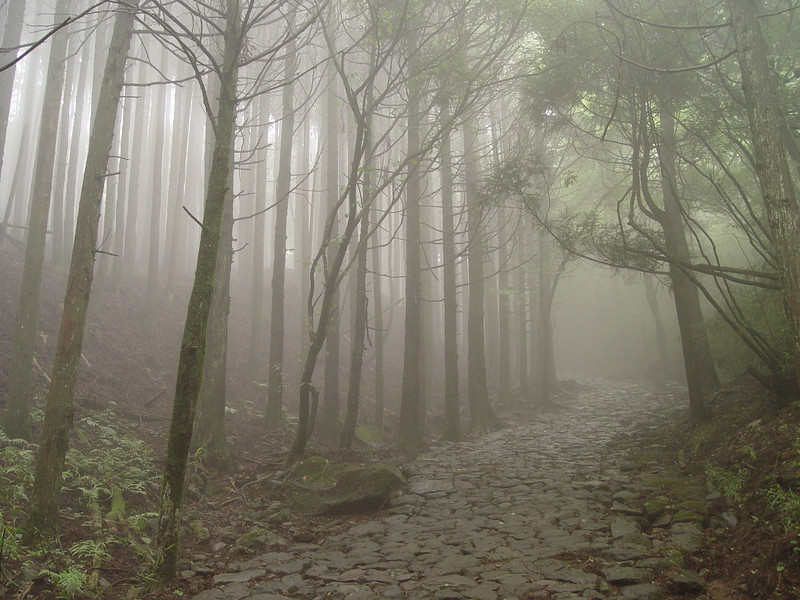
Ignacious wandered the treeline with a pouch, and in the dusk he found a thicket heavy with orange berries, plump and glossy. He gathered a good bushel and, back at the fire, crushed them into a tincture, the juice running a deep amber into a small flask. He meant to test it, but the fire was warm and the day had been long, and sleep took him before he could.
Edric noticed a large raven perched on a low branch at the edge of the firelight, watching the camp with one bright, steady eye. It didn’t move when he looked back at it. “A friend of Vesper’s,” he murmured, to no one in particular.
The raven stayed where it was until the fire burned low.
Ignacious dreamed of a cornfield. The stalks stood taller than a man, dry and rustling, and above them loomed a mill, its great sails turning slowly against a starless sky.
He woke in a cold sweat, gasping, the flask of amber tincture still unopened beside his bedroll. He was exhausted, as if he hadn’t slept a wink.
The road to Vallaki bent through a stand of dead birches, and the sound of steel on steel hit them before the sight did.
They came around the bend and found two knights in the middle of the road.
One wore a dark surcoat with a grinning gold sun across the chest, a green gorget at the collar, and a bascinet whose visor bore a wide, painted smile. He fought like a brawler: heavy, close, all shoulders and pommel, swinging his longsword as though trying to knock a door off its hinges.
The other was a thin gaunt figure with bloodless white skin. He stood tall in battered silver plate, a tabard of amber dragon scales hanging in ragged tongues below his belt, long white hair swept back from a gaunt, bloodless face and a moustache waxed to two perfect points. His eyes burned a dull, steady red. Where the smiling knight fought with rage, he fought with order: short, economical parries, his footwork exact.
He saw the party over his opponent’s shoulder and, without breaking his guard, inclined his head.
“Well met, chaps! I find myself in a spot of bother. Care to offer assistance?”
The smiling knight spun to look at them, his sword still raised, his visor grinning at them in front of a ruined breath.
“Citizens! Help me apprehend this man! He is a fugitive and a vagabond!”
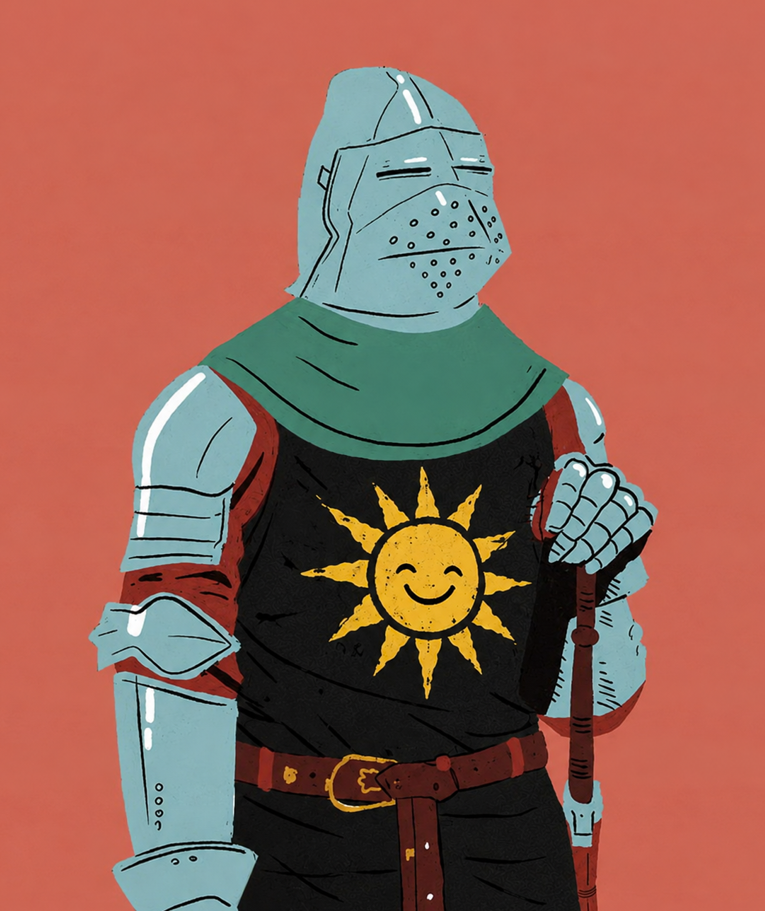
“Vagabond, is it?” The revenant sounded genuinely offended.
Their blades clashed again. The smiling knight lunged, shoulder first, and the revenant gave ground, one step, two, drawing him down the road in a slow, patient circle. It was like watching a dog harry a bear, and the party hesitated. The revenant’s smile did not reach his eyes, and the Baron’s man was, by his own account, the law.
Retnuh made up his mind first.
He lowered his shoulder and charged, catching the smiling knight square across the back and driving him to the ground in a clatter of plate. The knight bellowed, scrabbling for his sword, but it was only a moment’s distraction, which was all the other man needed.
The revenant’s blade came down in a single clean arc.
The smiling bascinet bounced once on the gravel and rolled to a stop, the painted grin still turned upward to the sky. The body slumped. Nobody spoke.
The revenant flicked the blood from his sword, sheathed it, and brushed a speck of dust from his gauntlet.
“All is well indeed,” he said.
Then he turned to face them, drew himself up to his full height, heels together, shoulders square, and saluted.
“Lords, my lady, I am Festibule. Commander Festibule, of the Fourth Battalion of the Order of the Silver Dragon.” He paused, and something almost sheepish crossed that pale face. “Ernest Festibule, if you’ll forgive the formality of the forename.”
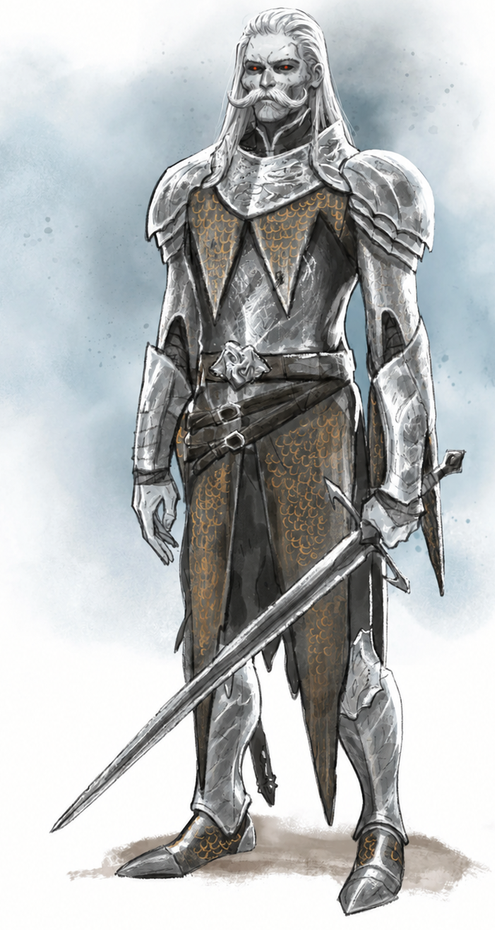
“Now then, chaps. You have questions, I expect,” he chirped.
“Are you alive?” came the first question, from Virro.
“In a manner of speaking,” came the reply.
Edric folded his arms. “Are you allied with Strahd?”
“Our sole mission is to see the end of the dark lord’s tyranny. We have pursued it for longer than I care to count.”
“How many of you are there?” Retnuh asked.
“A few dozen, give or take. More when I find my missing battalion.”
“Why did that man want to kill you?” asked Ireena.
“Ah, Dmitry and I have had many bouts. He is a knight of the Order of Contentment, and I have committed crimes against merriment, or some such.”
“What do you do?” piped Retnuh.
“Long ago, before the Count was a Count, the forces of King Barov came over the mountains and took this valley. We resisted. We were not successful. But we did not stop resisting, and that, I’m afraid, is rather the point of us.”
They asked him what else lay out in the valley, and he rattled off old places. There was the Amber Temple, high on the cliffs, a place he spoke of with obvious distaste. There was Argynvostholt, the Order’s old home, where his lord still kept watch. And there were the standing stones at Yester Hill. On learning of Retnuh’s accord with Strahd, he remarked that Retnuh’s honesty was disarming.
“Dear me. That poor fellow looks rather the worse for wear,” he gasped at Stanford, and drew out a folded length of cloth, amber and silver, the Order’s colours, embroidered with a dragon’s coil. “A caparison. You may as well have it. I’ve no need of it now.”
“Why not?” Edric asked.
“My horse was taken,” Festibule said. “By a roc.”
Nobody spoke.
Ignacious asked him to accompany them, and he declined. “The wards against the undead prevent my entry.”
He paused as he turned to leave.
“One more thing, and I mean it kindly. My lord is Vladimir Horngaard, commander of the Order. He brooks no ally of Strahd. None. Anything less than complete opposition to the dark lord will make you his enemy.” His eyes met Retnuh’s.
The gang burned the body of the smiling knight. Virro took his sword, but Retnuh made him swear to return it to this spot when he was done with it.
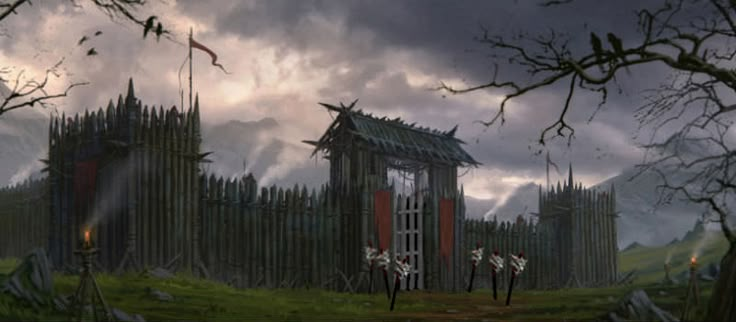
The road ended at a pair of iron gates, tall and plain and very well kept. Along either side of the approach, a row of pikes stood planted in the earth, and on each one sat the head of a wolf, jaws frozen open, eyes long since gone.
At the gates of Vallaki, the group was directed to the town square by two guards in smiling armour.

In the town square, the party found a large assembly of Barovians, some of them wearing masks with the same smiling-faced sun. Atop a large stage in the town centre, too high and shallow to be anything other than a repurposed gallows, stood a squat man with long, receding hair and vibrant red finery. His arms moved about as though he were a conductor while he spoke. At his side was a tall, slender woman in similar finery, who wrung her hands as the man spoke. Two large basset hounds flanked the pair and eyed the crowd.
A giant of a man, his right arm draped in a large cloak, was the only one not smiling. His head was shaven and he glowered at the crowd beneath him. He stood off to the side, his eyes fixed on Ireena from the moment the gang approached the crowd. This man was Izek Strazni.
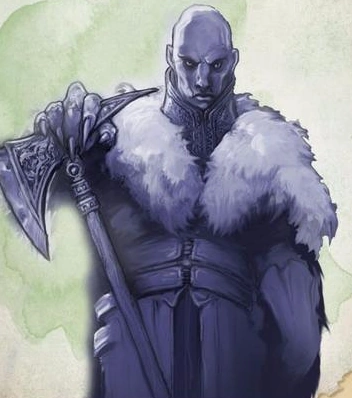
The man in the finery, who the gang came to learn was Baron Vargas Vallakovich, was hearing petitions from the townspeople the way a king does. One by one they approached the gallows with forced smiles, and one by one their concerns were dismissed with blind optimism.
“Something comes in the night to take my pigs, and leaves no prints.”
“Many blessings! Think of the amount you will save on pig feed! All will be well!”
“The flour cart has not come this past month. My bakery runs dry.”
“Great news! We can work off some of this winter fat and spare our purses for the time being! All will be well!”
The church sexton approached to ask about stolen church property, and was similarly dismissed. Each time the Baron said “All will be well,” the crowd answered in kind, as though at a church gathering.
The gang were invited up to the stage to introduce themselves. The large man, Izek Strazni, found himself in a face-off with Virro, who remarked on his lack of a smiling demeanour. Izek, easily seven feet tall, said only, “I have condition.”
After the crowd had mostly dispersed, the Baron called Izek away from Virro.
Retnuh knelt to feed the basset hounds and spoke to them softly. As he leaned in, he caught the smell on their breath: sulphur and old smoke, the same infernal reek he’d known from Buccephalus. These were no dogs. They were hellhounds.
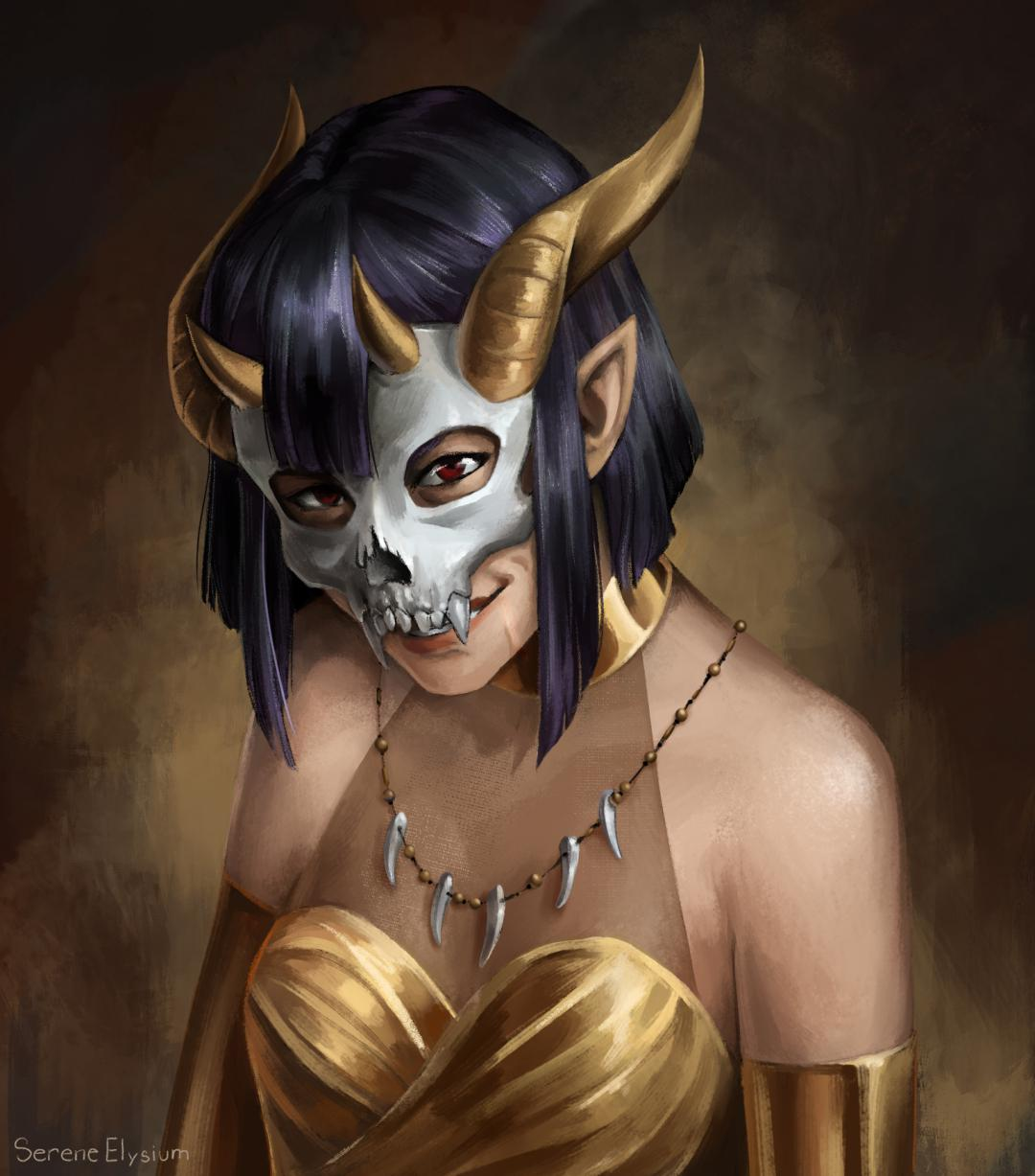
As the square emptied, one woman remained, standing with such a carefree air that she seemed to float on it. She rocked from side to side with a wide smile, watching Virro with a fixed, curious interest. She was short, her large brown boots moving easily beneath her, and she wore a shoulderless gold dress and a mask made from the skull of a horned creature.
“A rabbit?” she mused. “How’d you get into that?”
“What do you mean?” Virro asked, confused.
“The ears.” She gasped. “Are they real?”
Ignacious told her it wasn’t a costume, and that Virro came from the Feywild. She stared at them in silent confusion, then reached out and touched his ears in amazement.
“Well,” she said, “you saw what the Baron is like.” She glanced at the crowd and lowered her voice. “I think we should change a few things around here.” She paused, eyes lighting up. “Would you care for a bit of… revolutionary violence?”
The party asked about the town and the Baron. The woman introduced herself as Volenta Popofsky.
Ignacious wondered aloud whether the Baron might be an immortal like Strahd, a vampire who kept everyone cheerful for a reason. Volenta burst out laughing. “Oh, no. I remember the day he became Baron.”
Virro narrowed his eyes. “And how old are you?”
“You can’t ask a woman that!” She gasped in mock shock, then held up her left hand, the ring finger conspicuously bare. “Careful, I’m married!” She let it hang in the air for a moment. “Well, he is dead, though.”
She nodded toward a side alley, and Retnuh was the first to follow. As he rounded the corner, she rose on her toes and kissed him, catching him completely off guard. They shared an awkward fist-bump just before the rest of the party turned the corner.
Ireena drew close to Virro. “Can we trust her?”
Virro wasn’t sure.
“At least we can probably be certain she isn’t a vampire,” Ireena said. “The revenant said there are wards on this town that keep them out.”
The party traded ideas for causing general havoc, and Volenta mentioned that the Keepers of the Feather might be willing to stir things up, though she had no idea where to find them. Then the group split up to explore. Volenta and Retnuh headed for the Blue Water Inn, Ignacious went to find Bozena, the baker who had petitioned the Baron, and Ireena, Virro and Edric wandered the town.
The trio found themselves outside Blinsky’s Toys. The shop was a cramped little place, its entrance sunk under a dark portico, with a wooden sign shaped like a rocking horse hanging above the door, a B carved into both faces. Through the dirty glass, toys lay jumbled in crowded displays, and placards hung between them carrying the shop’s slogan, “Is no fun, is no Blinsky!” Inside, every shelf and rafter was crowded with playthings, and most of them were a little wrong: dolls with faces too lifelike, wind-up soldiers frozen mid-stride, puppets watching the door. The proprietor was Gadof Blinsky, a man with a fondness for eerie toys, and at his side perched Piccolo, a white-faced capuchin monkey in a tutu.
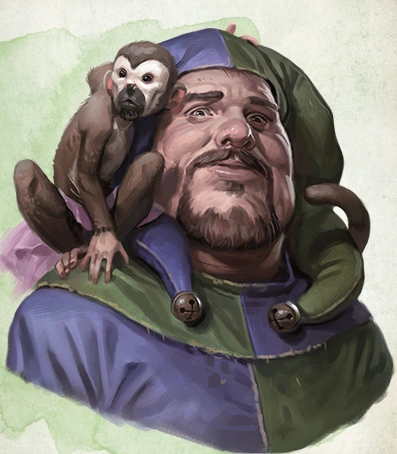
Blinsky was a warm, energetic man who bounced on his heels with every word, as though the sentences themselves were wind-up toys. “Ah, wyelcome, wyelcome, friends!” he sang, spreading his arms wide. “Come, come, see the leetle wonders of Blinsky! Is joy for the small, is joy for the big, and the prices, they are very kind!”
The gang looked around at the wares. Virro found a hand puppet in the likeness of Strahd, complete with a stiff cape and a thin, hungry smile, slid his hand inside it for a moment, and bought it.
Ireena stopped in front of a doll on a high shelf, and the colour drained from her face. It had her bronze skin, her scarlet hair, even the same shade of dress she wore. It was her face, almost exactly, down to the line of her jaw.
Blinsky followed her gaze and laughed, delighted. “Ah-hah! You muss show Blinsky how you make them, yes? Clearly my leetle creations are pale beside yours!” He nodded at the doll, then at her, beaming at the resemblance.
When she asked, his cheer wavered, and he lowered his voice. The dolls were Izek’s doing, he said, the captain of the Order of Contentment. Each month, Izek demanded a new one in lieu of taxes. Blinsky made them and handed them over, and he had no idea what they were for.
Ignacious had found his way to The Merry Crust. It was a plain little place, little more than a worn wooden counter with a handful of pastries laid out on trays, the rest of the shelves nearly bare. Behind it stood Bozena, floury to the elbows, with a smile that didn’t quite reach her eyes. When he asked about the flour, she sighed. It came from Krezk, to the west, she said, and nothing had arrived for weeks. They’d had no word from the village, either.
At the Blue Water Inn, the timber building leaned over the street, its yellow windows warm against the dusk. A sun banner hung limp over the door, and the smell of woodsmoke and roasting meat drifted out into the cold. Inside, hunters and townsfolk filled the long common room, loud and flushed with drink, and the low noise of conversation welcomed Retnuh and Volenta inside.
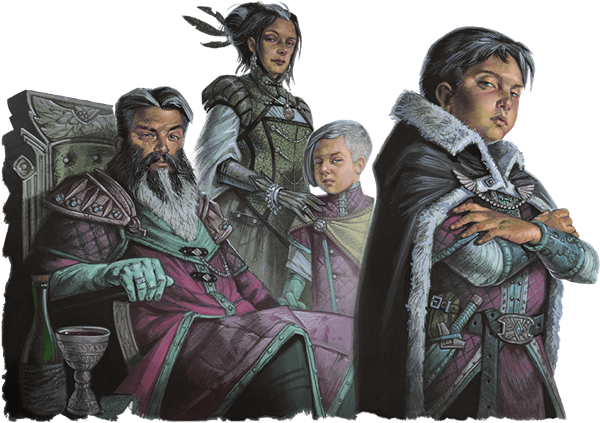
Inside they met the innkeeper and his family, the Martikovs. Urwin Martikov and Danika Martikov manage the tavern and inn, which thrives as much as anything can in this place. The place was busy, but a glance at the shelves behind the bar showed little ale and less wine.
Urwin poured for Retnuh and Volenta, and when Retnuh asked after the wine, he sighed. No shipment had come from the Wizard of Wines, the winery out west, in far too long, and he would gladly hire adventurers to go and see what was wrong. His relatives ran the place, he said, and if Retnuh and his companions could find out what was going on, they’d have free room and board at the inn for as long as they liked.
Volenta, who was not listening, plucked a bottle of Red Strongwash off the bar and began drinking it straight from the neck.
Two men came up behind Retnuh. They were young and noble, and their fine coats were rumpled and stained from a long evening. The Wachter brothers were brash drunks who spent their nights at the Blue Water Inn looking for trouble. Nikolai, the elder, was lean and pale, with the glassy, amused look of a man who found everything slightly funny. Karl, the louder and more obnoxious of the two, was broader and redder, his shirt half untucked and his grin loose with wine.
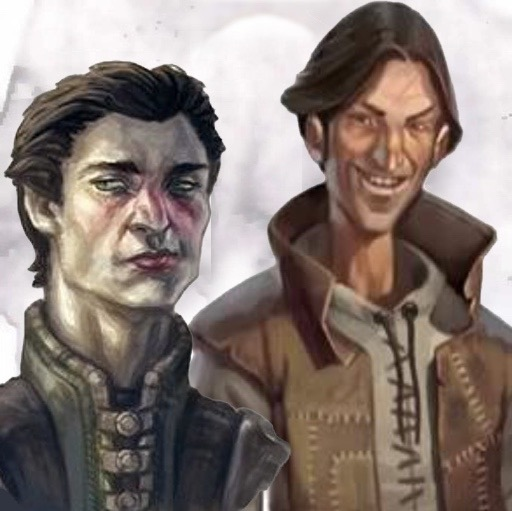
Karl Wachter leaned right next to Retnuh’s ear and let out a loud belch. Retnuh landed a clenched fist between the man’s legs, doubling him over. Volenta’s eyes lit up. She took a large swig of wine before bringing the bottle down on his head in a rain of glass and wine, then kicked him in the neck, dropping him to the floor unconscious with a horrid slap. Mayhem broke out in the bar all at once.
Ignacious caught up with the rest of the gang on their way to the church to ask about its stolen property. On the way, they came upon a sign detailing the town’s methods of “discipline”: “Contentment”, “Amusement”, “Convalescence” and “Dischargement”. The gang recalled seeing some people wearing strapped masks, called masks of contentment.
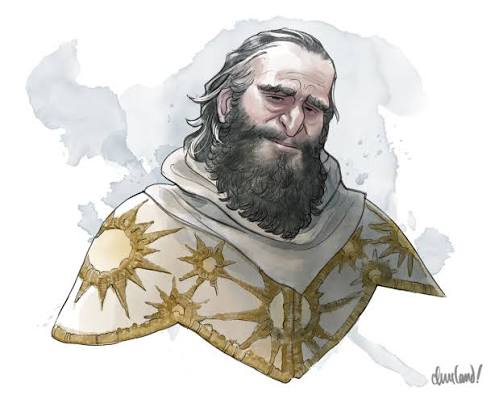
In the church, St. Andral’s, they met Father Lucian, a kindly priest of the Morninglord, who asked Ignacious and Edric about their faith. Sensing that they were men of faith, he asked them for help locating the bones of St. Andral, which he told them were missing from the church’s crypt. He warned them that without the bones, Vallaki’s protection against the undead wouldn’t function, and that there could be vampires amongst them at this very moment.
PREVIOUS -> Session 4 - Horsemen | | NEXT -> Session 6 - Resting place